In 1904, while climbing trees, 12-year-old Adolph Rosenow was “hunting hickory nuts”, when a misstep caused him to fall fast towards the ground. Given the nature of the injury, I imagine, he outstretched his arm, stiff-arming the earth before impact. The drop from the tree left him with a dislocated wrist and three breaks in his left arm, one near the wrist and two above the elbow. The lower portion of his arm was “jammed up” a brutal 3 inches. Undeterred, he somehow walked half a mile to his boat, where friends rowed him across Little Lake Butte des Morts to his Menasha home.
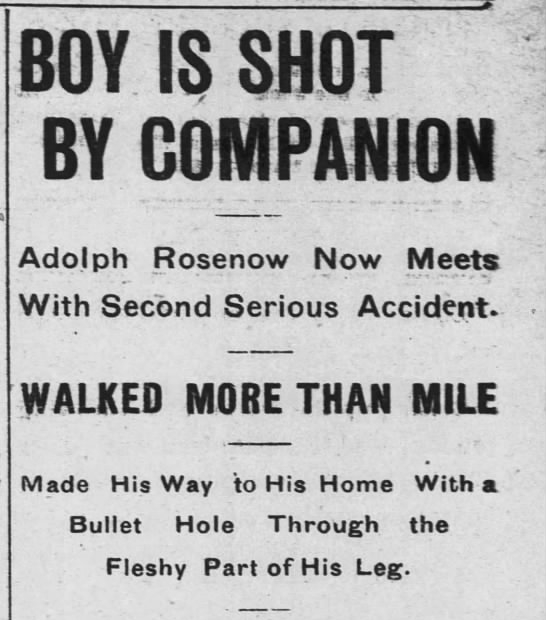
Three years later, fate dealt another blow. Hunting squirrels in the same area, 15-year-old Adolph was accidentally shot by a “weak” trigger. The rifle bullet tore through his leg above the knee. Once again, he walked home, this time reportedly over a mile. The newspaper recounting the incident noted his “crippled arm,” hinting at the lasting impact of the previous fall.
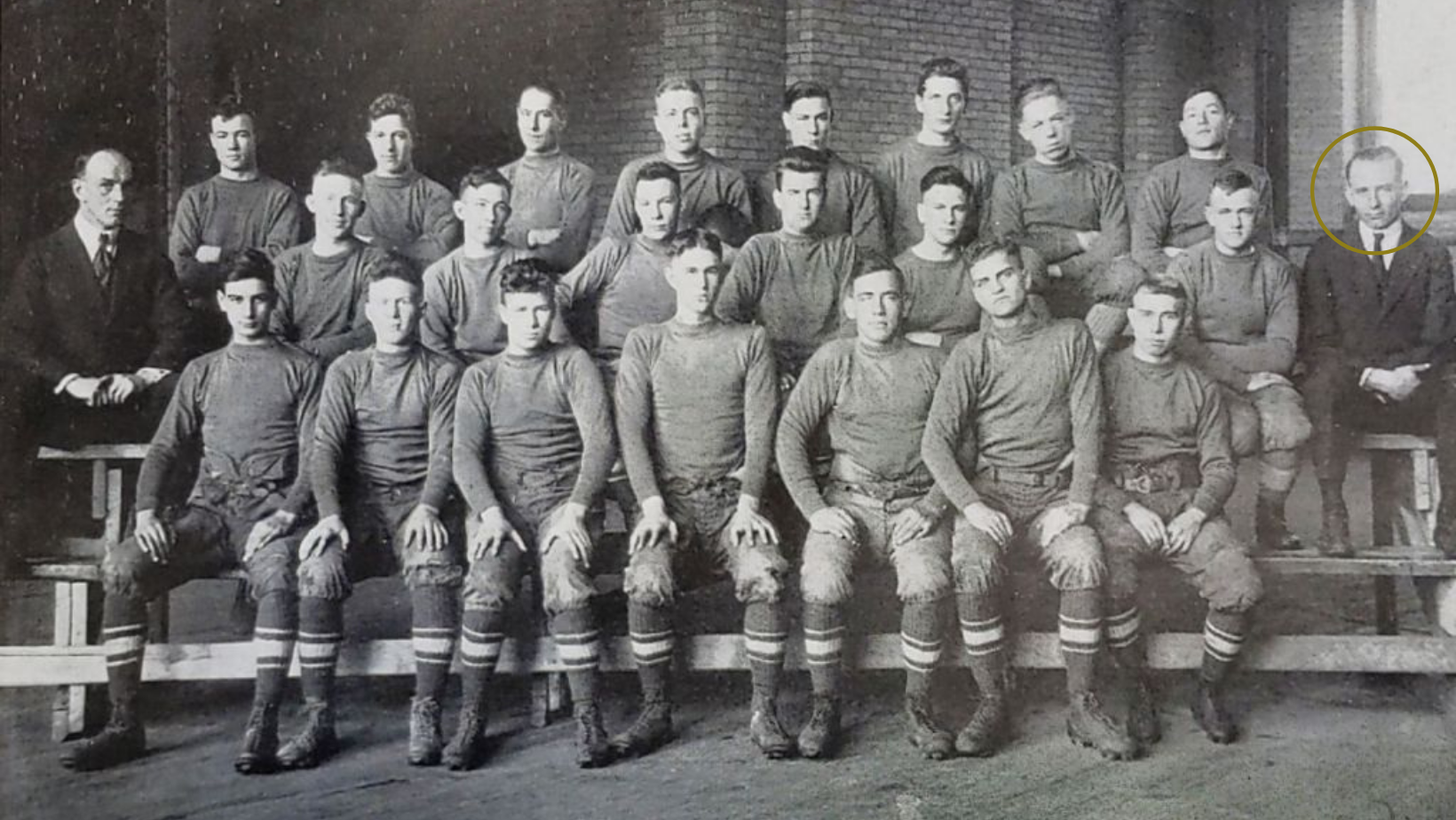
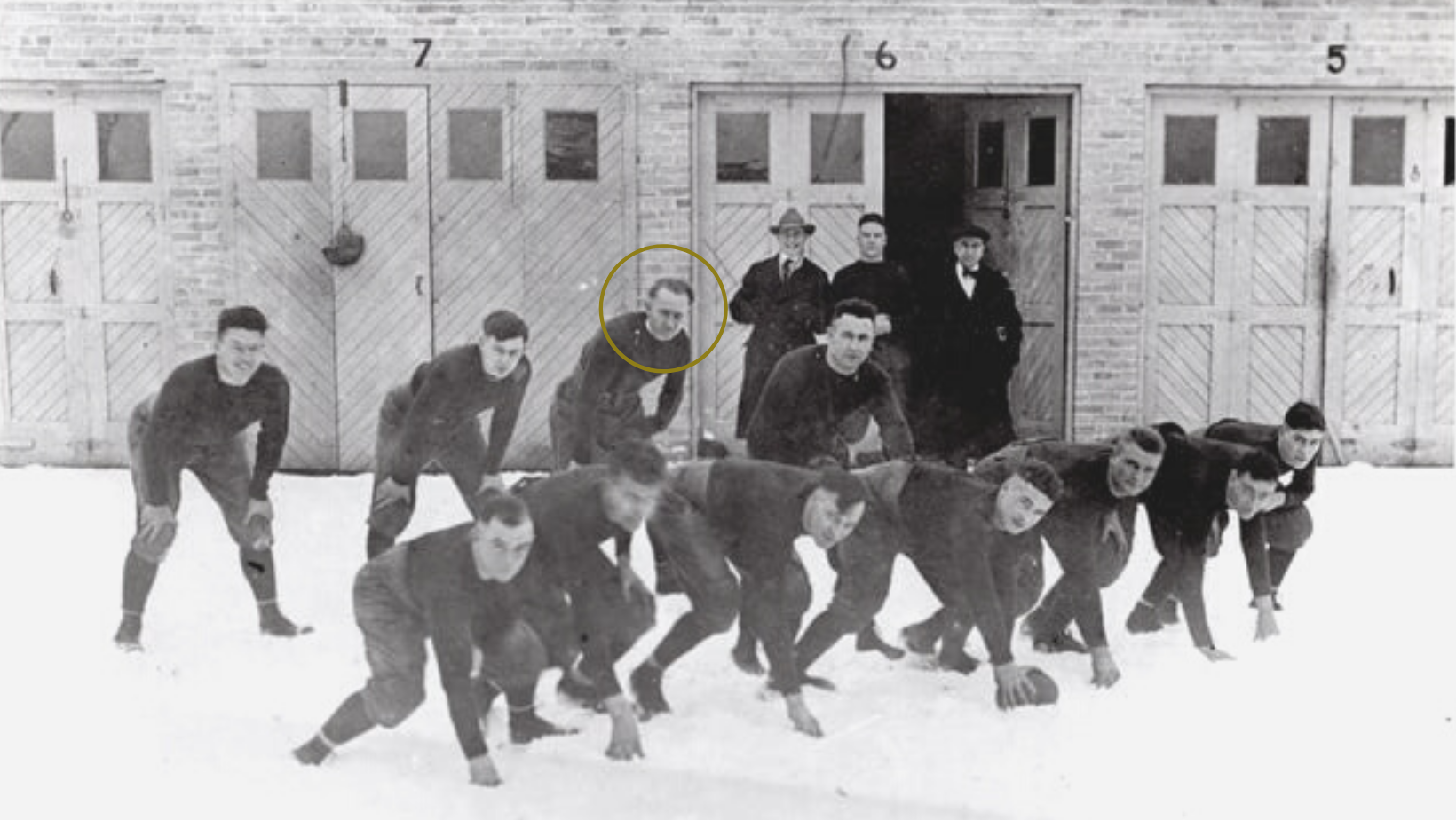
Despite adversity, Adolph thrived. At Menasha High School, he starred in basketball and football, even in the era of two-handed basketball. A football team photo, published in the 1925 yearbook but supposedly featuring the 1912 team, offers the first hint of a new reality: his arm amputated around the elbow. The year discrepancy remains a mystery, but a commencement program record suggests 1910 might be more accurate, given the names in the photo.
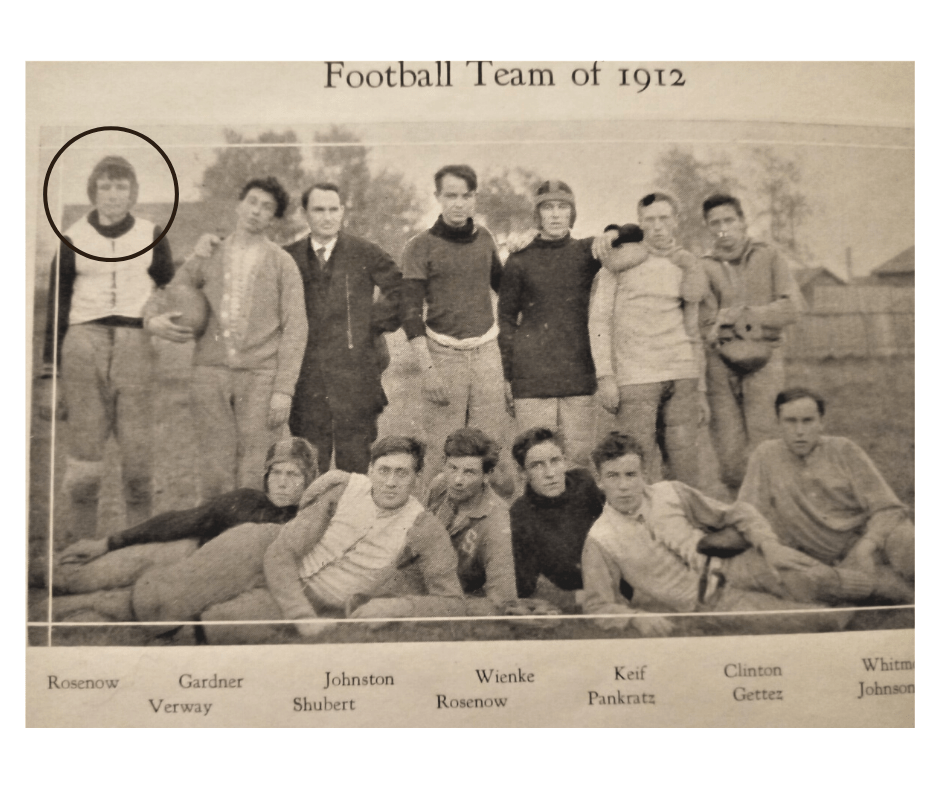
Adolph Rosenow is circled, notice the absence of his left hand
His athletic prowess was undeniable. In October 1910, the Menasha Record reported A. Rosenow and L. Whitmore each scoring two touchdowns in the second half for Menasha High. February 1911 saw Menasha crushing Waupaca in basketball, 86-8, with “The work of Whitmore, Weinke and A. Rosenow was the feature of the contest.”
Now known as Gustav A. Rosenow, he studied at the University of Wisconsin’s College of Letters and Science. His thesis explored the “Historical and Geographical Influence upon the Fox-Wisconsin River.”
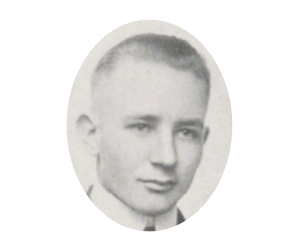
“Rosie”
UW Yearbook | 1917
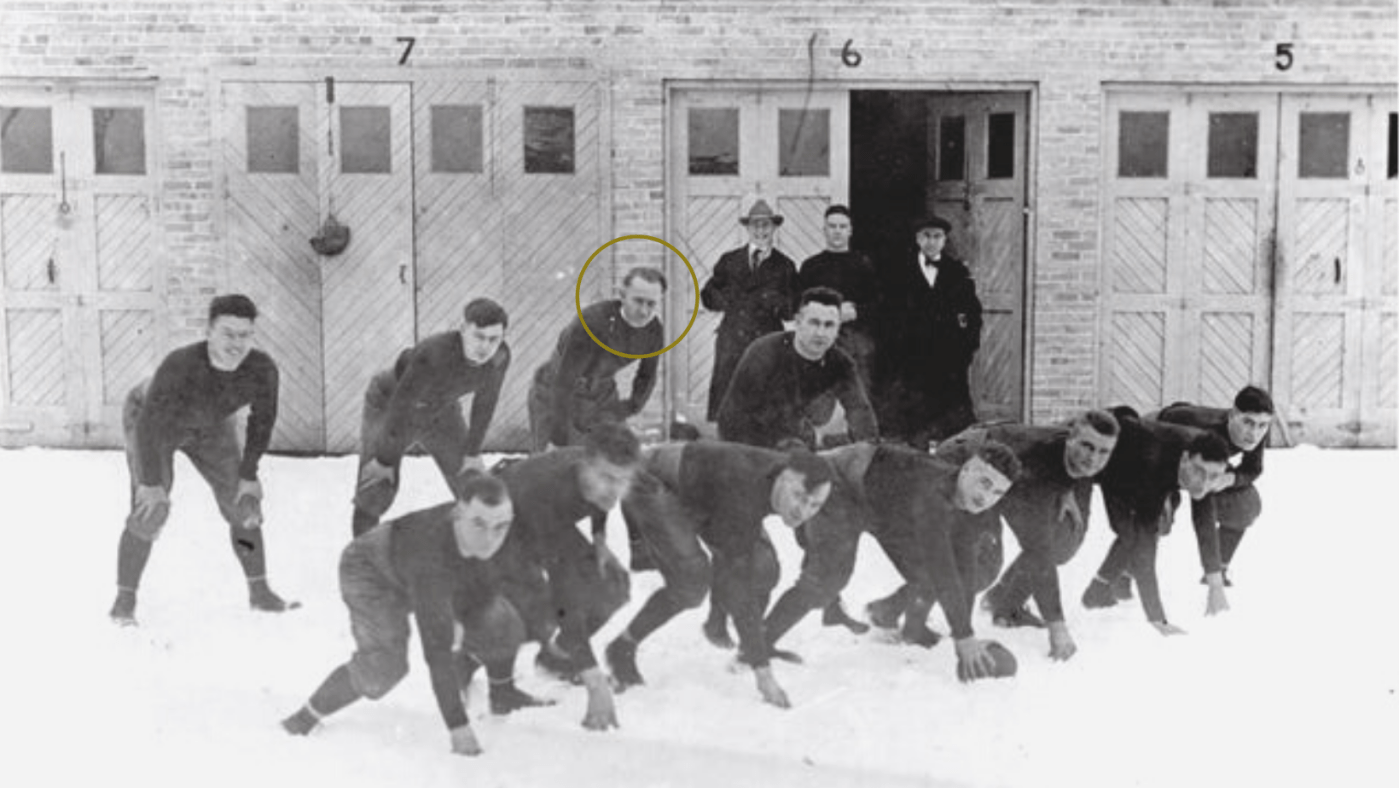
Although the newspaper (Green Bay Press-Gazette : Sep 9, 1918) described Rosenow as a University of Wisconsin football and basketball star, I couldn’t find any record that he ever played varsity football for Wisconsin. The Engineering team at Wisconsin though also had a football team, could he be the player in the middle wearing the jacket?
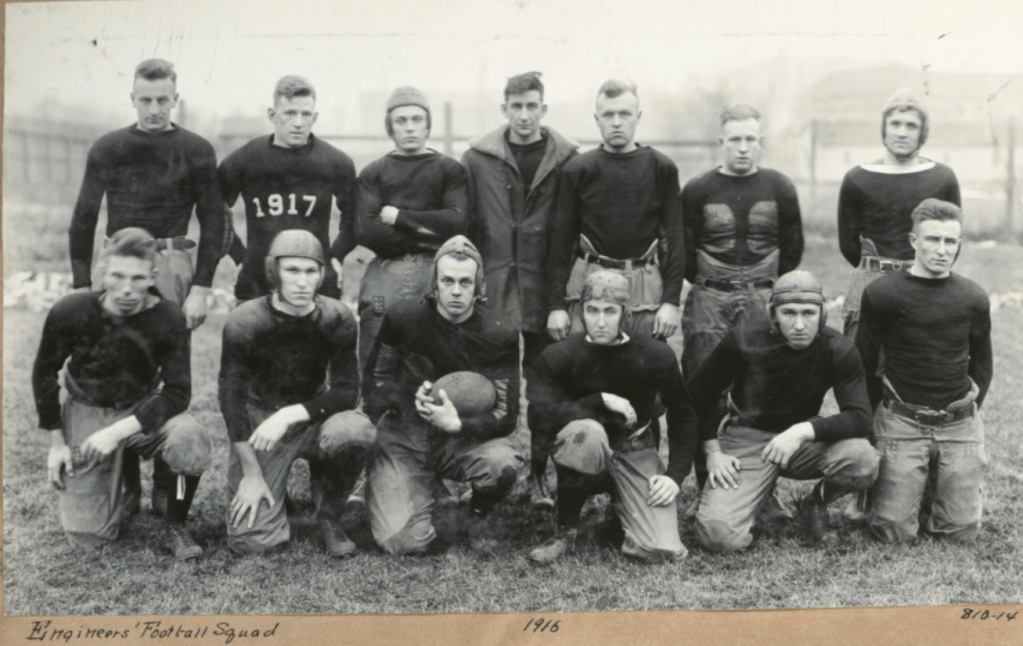
Courtesy of University Archives and Records Management
After a brief stint as principal in Daggett, Michigan, he progressed to Green Bay West where he was a science teacher and basketball coach. In later years, he would say he was the athletic director at West. His football coaching timeline remains a little fuzzy, initial speculation suggests Coach Willard “Bill” Ryan as head coach until Ryan’s WWI enlistment pushed Rosenow into the head role in 1918. Presumably, his missing hand exempted him from enlistment, leaving him to coach the football team. Ryan then returned for 1919 preceding Morris Dalton’s eventual hiring. Rosenow is present in some football team photos, whether he was included as athletic director or assistant football coach (or both) remains unclear.
Side note: In the 1921 Green Bay West team photo, John A. Sullivan (player) and Gus Rosenow (coach) are both present, each was a football player with an amputation. See my post on John A. Sullivan here.
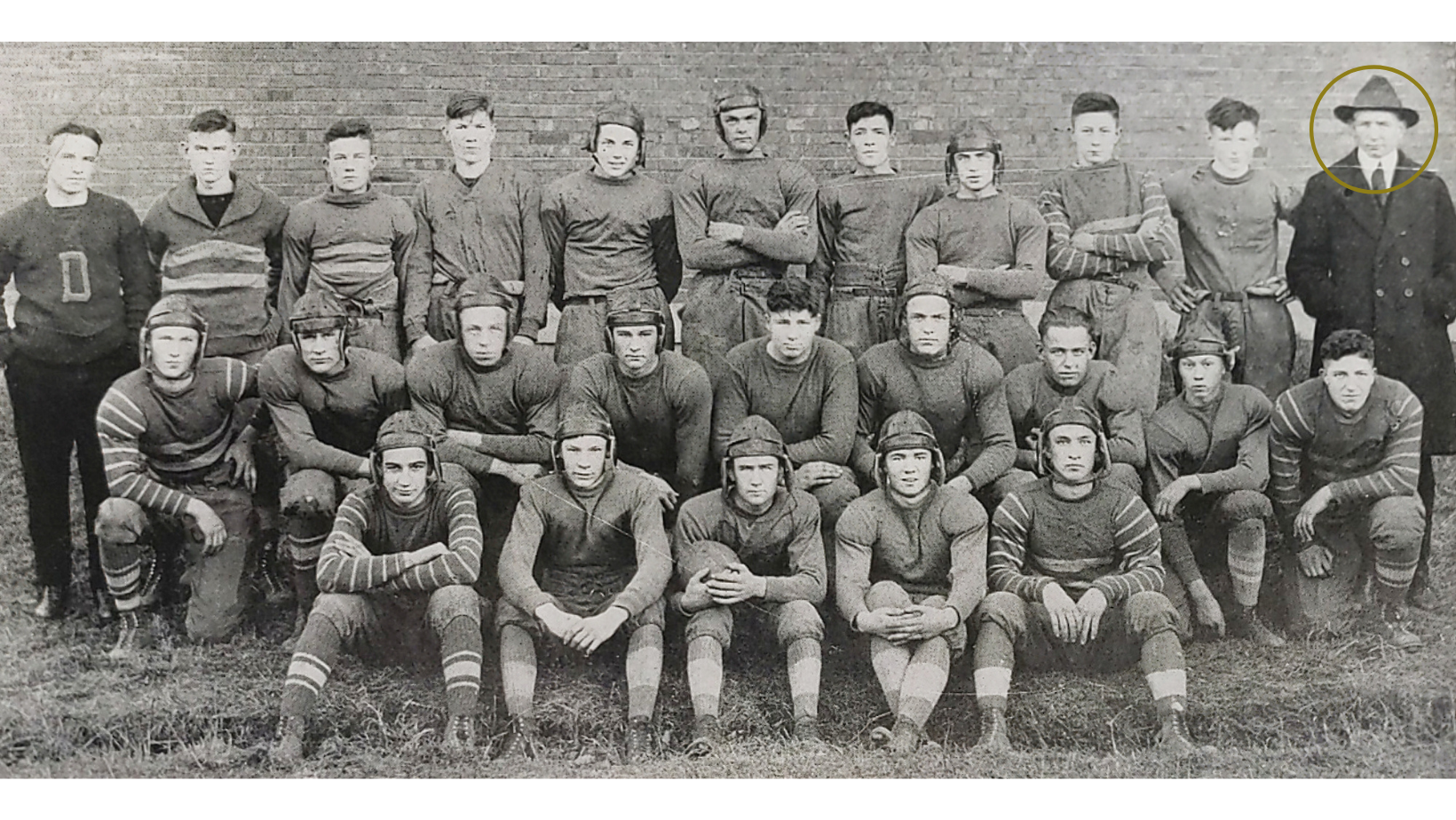
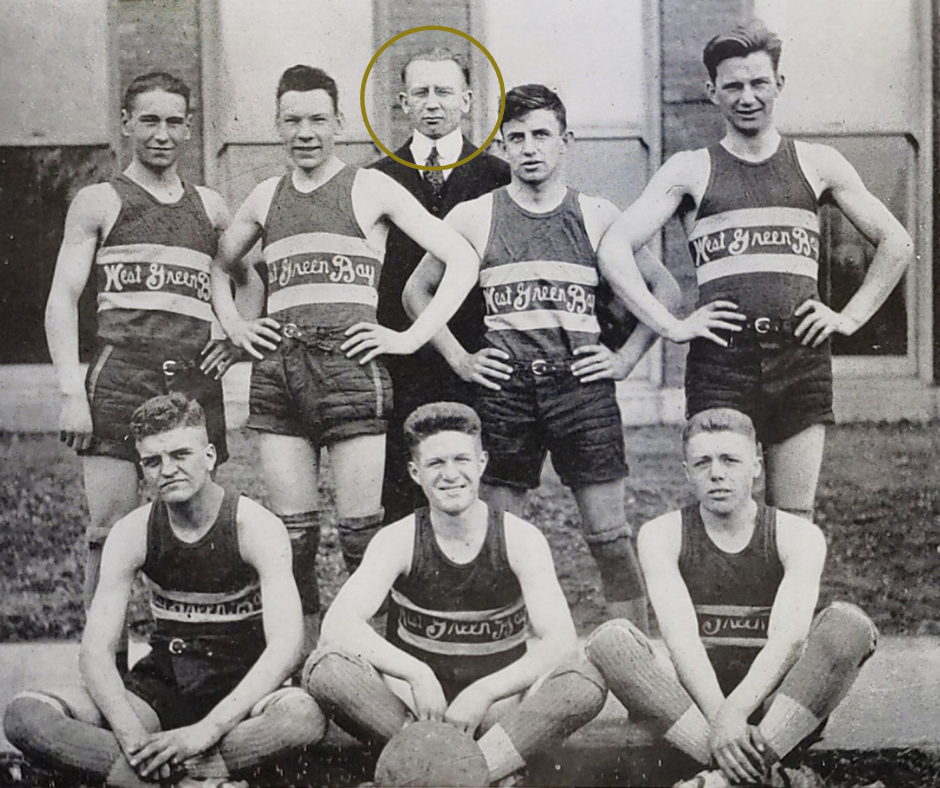
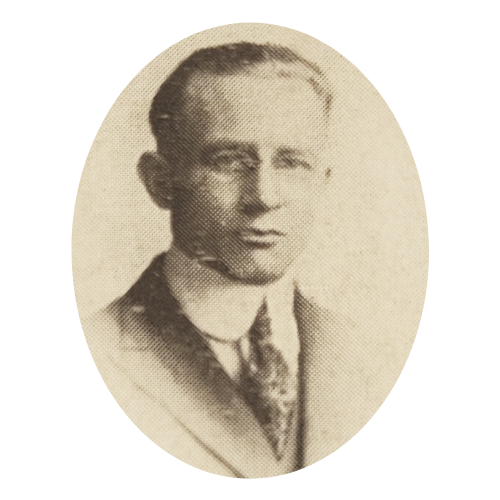
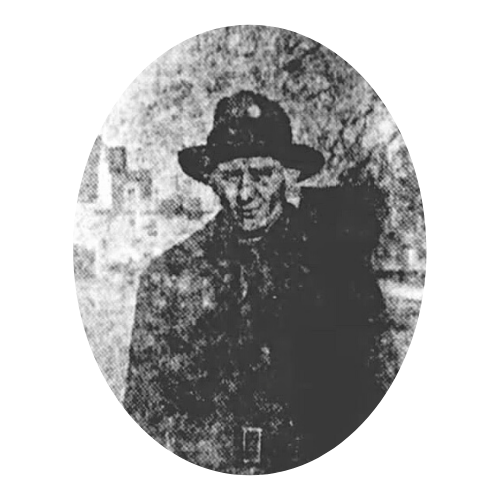
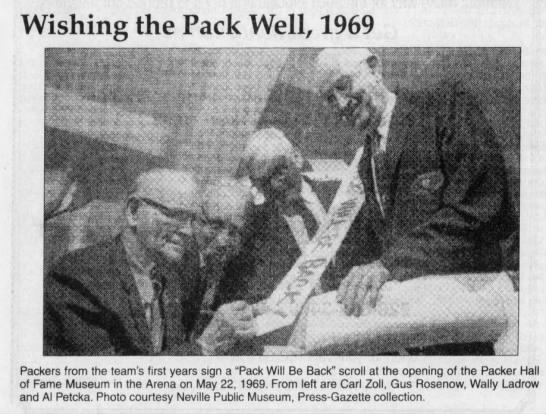
The early Green Bay Packers were a “town team” and included a lot of former West and East Prep stars. While still a coach at Green Bay West, Rosenow played halfback for the Packers’ first two years (1919-1920), mostly in a backup capacity. At 6 feet, he was the tallest Packer on the 1919 team, and at 27, one of the oldest. Of course, as a ball handler, all of his catches were one-handed by necessity.
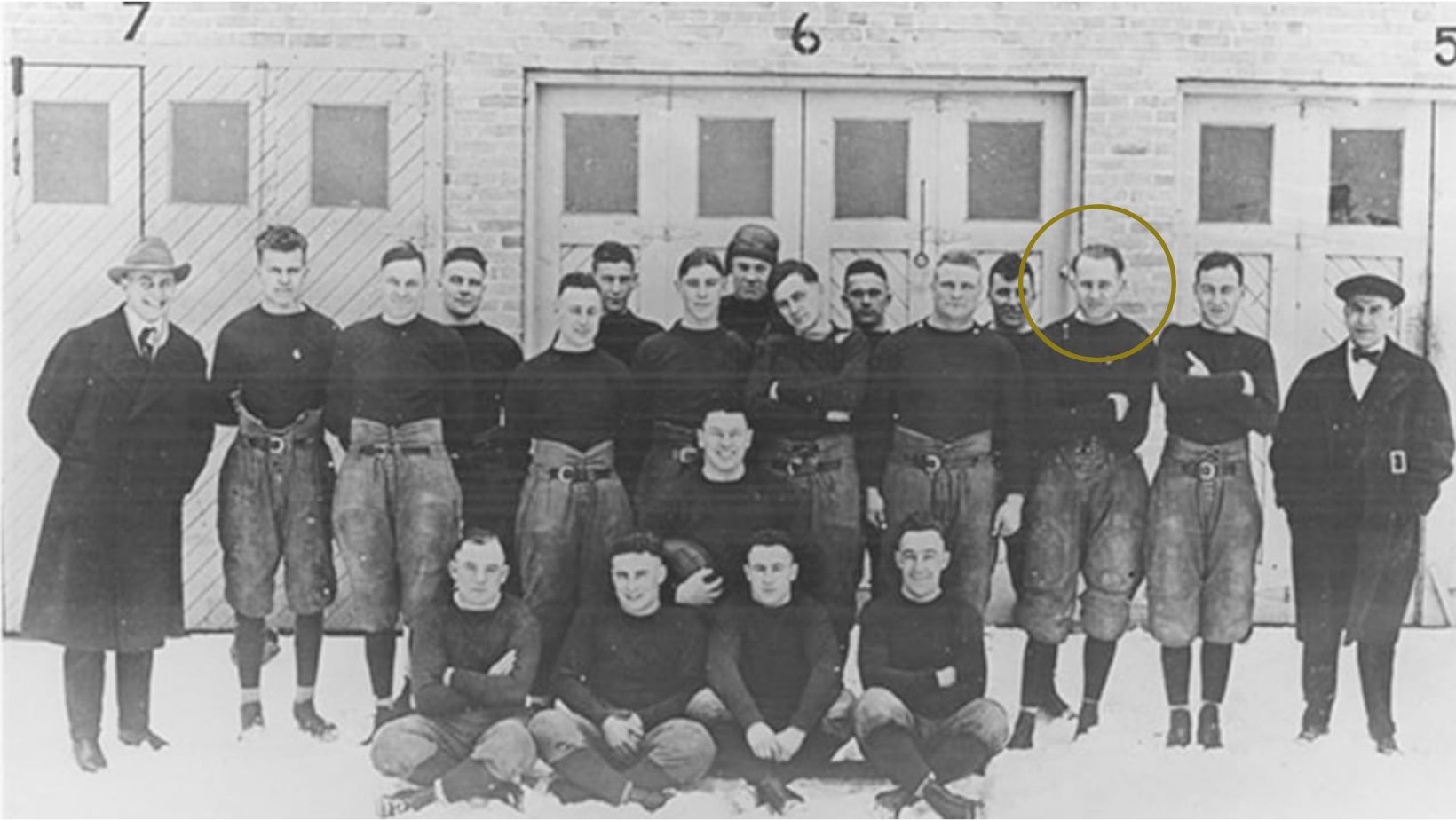
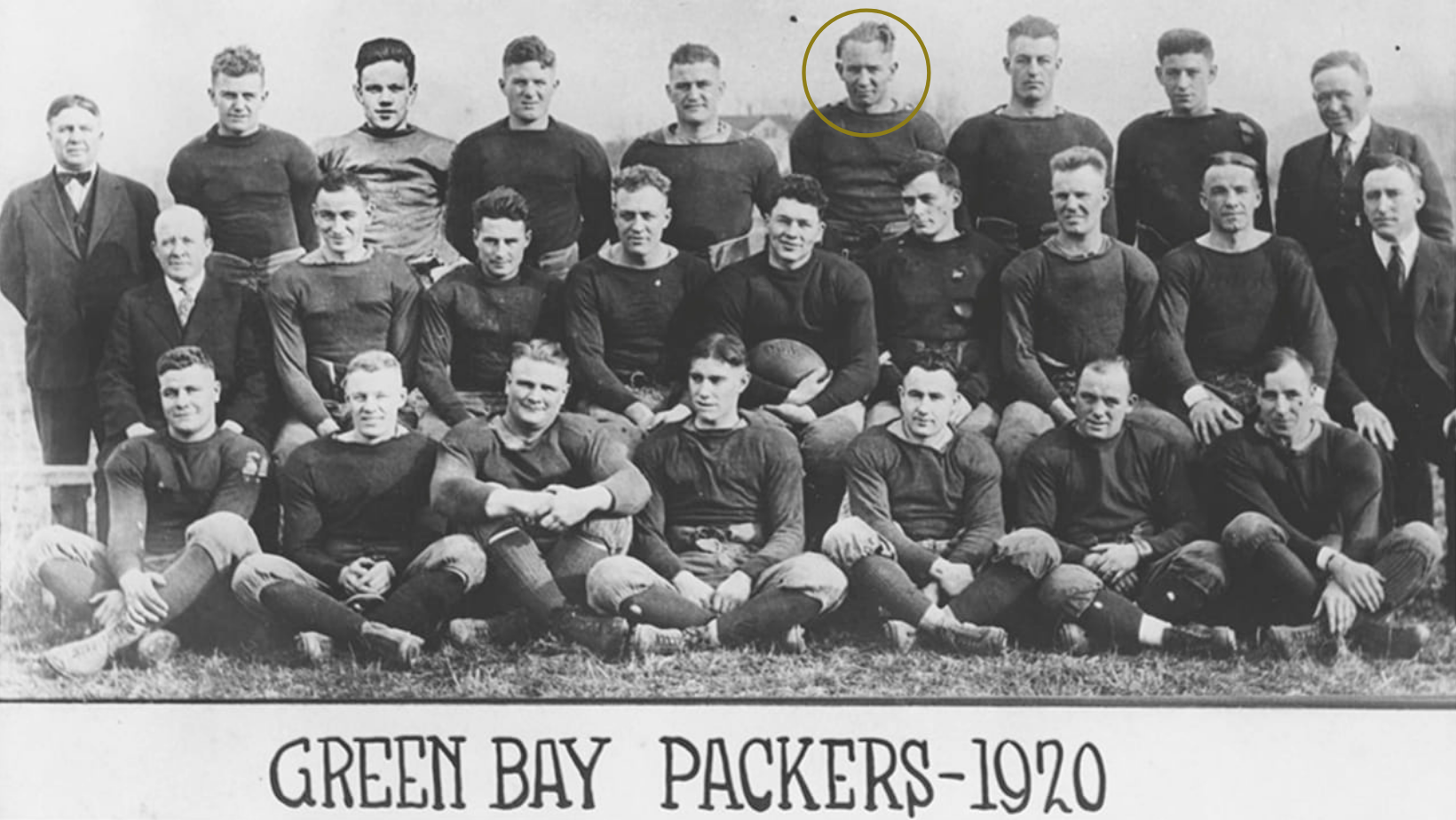
The down-to-earth Rosenow eventually moved to Niagara, Wisconsin, where he became the superintendent of schools. He died at the age of 82 in 1974, at his Edgewater Beach cottage. At the time of his death, he was the oldest living Packer, and was one of the last members of the original 1919 team, Wally Ladrow, the other, would die a month later.
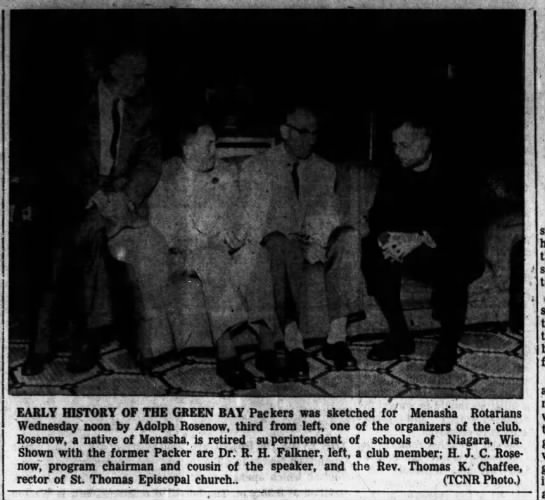
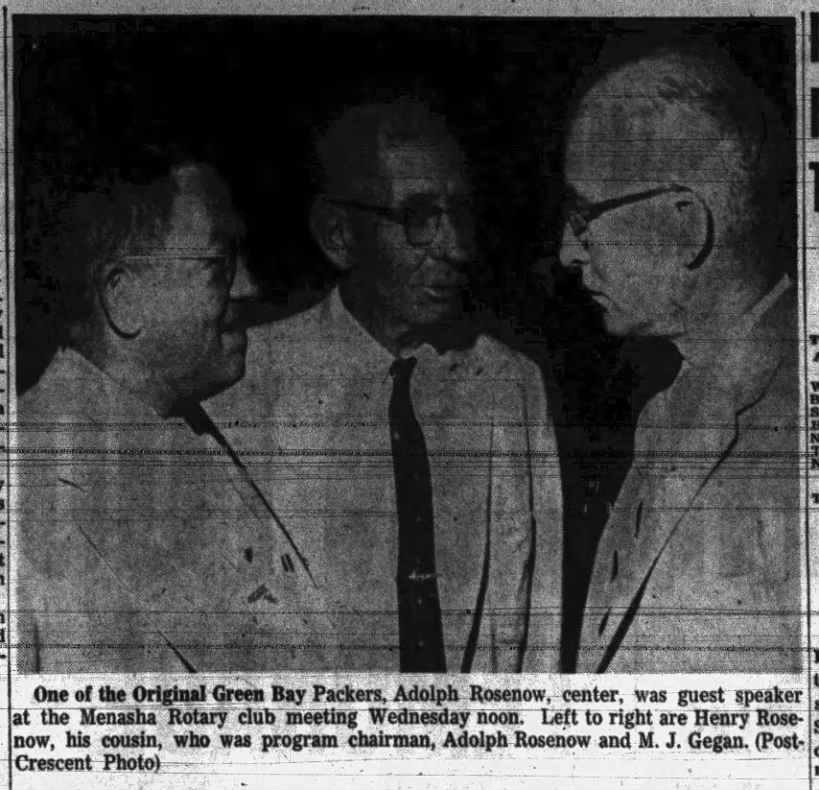

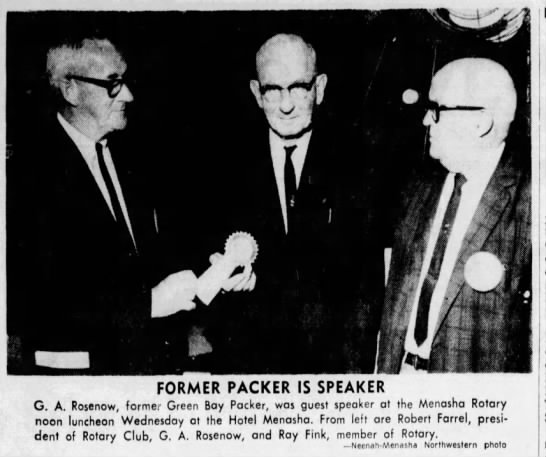
Special thanks to Cliff Christl and Packerland Pride for their initial writings of Gus. Without those, I wouldn’t have encountered him.
Sources
The Post-Crescent : Sep 27, 1904
The Menasha Record : Sep 16, 1907
The Menasha Record : Oct 3, 1910
The Menasha Record : Feb 4, 1911
The Menasha Record : Sep 21, 1912
The Menasha Record : May 25, 1916
The Oshkosh Northwestern : Jun 12, 1916
The Menasha Record : Jun 20, 1917
The Menasha Record : Oct 16, 1917
Green Bay Press-Gazette : Sep 9, 1918
Green Bay Press-Gazette : Sep 12, 1918
Green Bay Press-Gazette : Nov 27, 1918
Green Bay Press-Gazette : Feb 14, 1919
Green Bay Press-Gazette : Aug 30, 1919
Green Bay Press-Gazette : Nov 29, 1920
Green Bay Press-Gazette : Nov 5, 1928
Marshfield News-Herald : Oct 23, 1930
The Sheboygan Press : Oct 17, 1946
News-Record : Aug 8, 1957
The Post-Crescent : Aug 8, 1957
Green Bay Press-Gazette : Nov 10, 1963
The Oshkosh Northwestern : Sep 23, 1965
The Post-Crescent : Sep 21, 1969
Green Bay Press-Gazette : Jun 16, 1974
Green Bay Press-Gazette : Jun 28, 2000
Green Bay Press-Gazette : Sep 24, 2000
Daily Press : Feb 5, 2011
University of Wisconsin Photographic History
Green Bay West Yearbook 1920
Green Bay West Yearbook 1921
Menasha High School Yearbook 1925
East vs West : A Rivalry 100 Years in the Making
The Greatest Story in Sports (Green Bay Packers 1919-2019) by Cliff Christl
 Old Green Bay
Leave a comment